

DCRI Accomplishments – Summer-Early Fall 2026
DCRI Accomplishments showcases the publications, awards, and other achievements of our faculty, staff, and trainees. Each quarter, a new collection will highlight the most recent accomplishments. Together, these accomplishments reflect the breadth of DCRI’s impact.
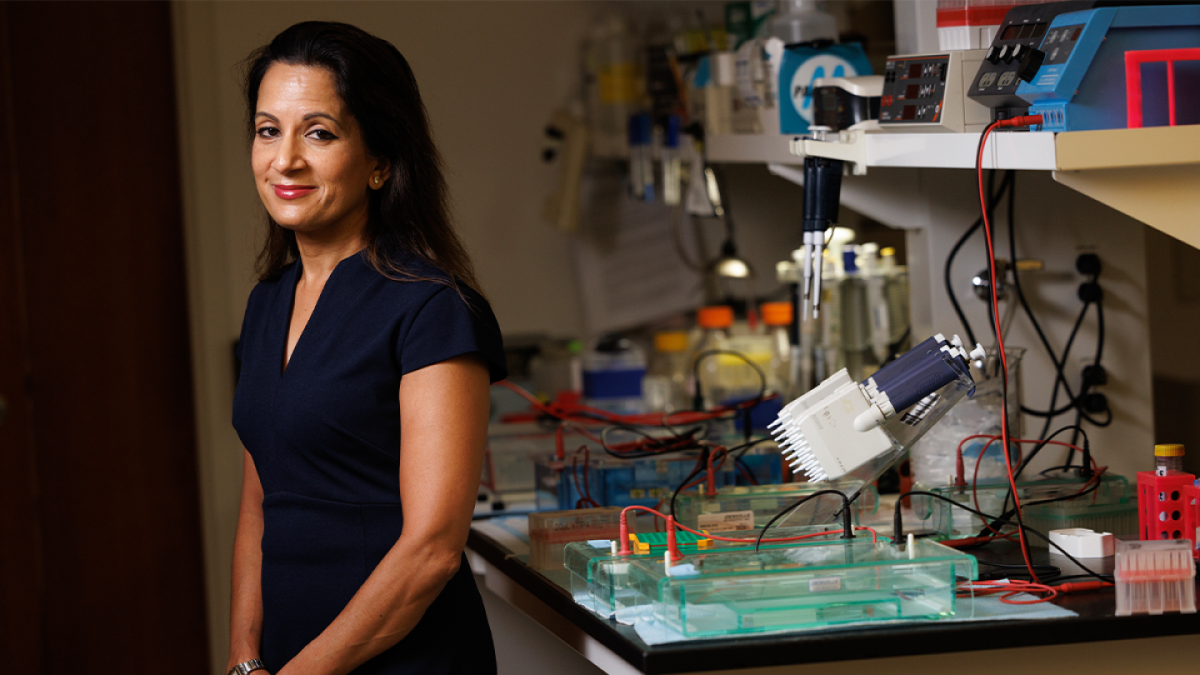
The next frontier of heart care
Svati H. Shah, MD, was a cardiology fellow at Duke in the early 2000s when a realization began to haunt her: Young men and women in their 20s and 30s were arriving in the cardiac unit with heart attacks that seemed to defy explanation. "Some seemingly healthy people developed heart disease," she said, "while others did not." Shah could not stop asking why. That question — quiet and persistent — would shape the next three decades of her career, and in ways she couldn't predict then, help reshape what cardiology itself is becoming.

DCRI to Serve as Clinical Data Coordinating Center for NIH-Sponsored AMP® Bespoke Gene Therapy Trials Focused on Rare Diseases
The Duke Clinical Research Institute (DCRI) is now assuming a greater role in national efforts to deliver effective, personalized therapies to patients more broadly and rapidly. The institute now serves as the Clinical Data Coordinating Center for the National Institutes of Health (NIH)-sponsored Accelerating Medicines Partnership® Bespoke Gene Therapy Consortium (AMP® BGTC) clinical trials. The role was announced at the AMP BGTC session during the American Society of Gene & Cell Therapy Annual Meeting in May 2026.

DCRI to Lead National Consortium to Advance Safe, Scalable AI for Heart Failure Care
ARPA-H award supports nationwide effort to build next-generation artificial intelligence tools designed to enable an integrated, holistic cardiovascular care platform that provides real-time guidance that patients and care teams can act on.

DCRI Expertise, Research Featured at ESC Congress 2026
Faculty and teams from the Duke Clinical Research Institute (DCRI) contributed to a broad range of scientific and educational sessions at the 2026 European Society of Cardiology (ESC) Congress, held Aug. 28-31 in Munich. Their work was featured across presentations, guideline discussions, chair and discussant roles, and several of the congress's highly anticipated Hot Line studies.

STAR's Largest Cohort Builds Research Skills, Meets the Teams Behind the Trials
The Duke Clinical Research Institute (DCRI) recently welcomed 33 students to the 2026 Summer Training in Academic Research (STAR) Program — the largest cohort since the program’s launched in 2012. STAR is a research training program for high school, undergraduate, and medical students that combines virtual and in-person instruction in research methodology and scientific writing.

DCRI Executive Director Hernandez Reappointed to American Heart Association Southeast Board of Directors
The American Heart Association announced the reappointment of Adrian Hernandez, MD, MHS, to its Southeast Board of Directors for the 2026–2027 fiscal year, recognizing his continued leadership and commitment to advancing the organization’s mission.

Gonzalez, Rymer Take the Lead of DCRI Fellowship Program
The Duke Clinical Research Institute (DCRI) Fellowship Program recently entered a new chapter as Daniel Gonzalez, PharmD, PhD, assumed the role of director and Jennifer Rymer, MD, MBA, MHS, became associate director on July 1. The appointments follow six years of leadership from Sana Al-Khatib, MD, MHS, Adam Goode, PhD, DPT, and Neha Pagidipati, MD, MPH, who guided the DCRI’s flagship postdoctoral training program through a period of significant growth and transformation.

2026 DCRI Excellence Awards Recognize Outstanding Contributions
Behind every successful Duke Clinical Research Institute (DCRI) study or partnership are the people whose efforts made it possible. On Tuesday, June 30, the DCRI came together virtually as the finale of the organization’s Town Hall to celebrate the fourth annual 2026 DCRI Excellence Awards.

DCRI Scientist-Leader Brings Clinical Research Lens to American Heart Association Presidency
Manesh Patel, MD, officially begins his term as president of the American Heart Association on July 1, stepping into one of the most visi